


The M-Bus was developed in 1992 for remote reading of consumption data (meters) at the University of Paderborn by Prof. Dr. Horst Ziegler in cooperation with Texas Instruments Deutschland GmbH and the company Techem GmbH.
Meter-Bus, or M-Bus for short, is a simple and cost-effective technology that is becoming increasingly important in the market for recording consumption data. Especially in connection with inexpensive consumption meters (gas, electricity, heat, water meters) in building management systems.
The M-Bus was first standardized in EN1434 and then defined in the independent EN13757, which also includes the new radio standard for wireless M-Bus communication (EN13757-4).
The wired M-Bus is a serial transmission via a two-wire cable (e.g. telephone cable J-YstY N2 x 0.8mm²).
The M-Bus is a master/slave-based system with one master and up to 250 slaves.
Transmission from the master to the slave takes place via a voltage signal (0 V to 38 V). The slave responds by changing its current (11 mA to 20 mA). The M-Bus is reverse polarity protected but not short-circuit proof.
M-Bus masters differ in the number of M-Bus slaves they can operate, i.e. in the power of the integrated power supply unit. Each M-Bus slave requires 1.5 mA, which corresponds to a so-called "load". There are masters that can only operate a few slaves, others up to 250.
Many M-Bus slaves can be supplied via the bus voltage of the master. In this case, a slave may draw a maximum of up to four loads of 1.5 mA current each. If the bus supply fails, the slave must have a battery supply so that no data is lost. Purely battery-powered M-Bus slave devices are also available.
The maximum cable length is approx. 1,000 m, depending on the number of participants and baud rate. Repeaters are usually used for cable lengths of over 350 m.
The baud rate of the bus can range from 300 baud to 9,600 baud (typically 2,400 baud). However, all participants must work at the same baud rate. The higher the baud rate, the shorter the cable length.
A PC with a corresponding M-Bus to RS232/Ethernet/USB level converter can also act as the master.
Wireless M-Bus communication (M-Bus Wireless) uses the license-free frequencies 868 MHz, 434 MHz and 169 MHz.
Topology
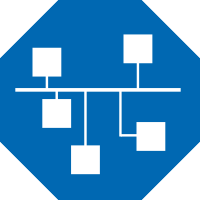
No specific topology is prescribed.
There are two ways of addressing M-Bus slaves on the bus. Addressing takes place via the primary or secondary address. The primary addresses can be used freely from 1 to 250. Addresses 251 to 255 are reserved (255 is the broadcast address). Address 0 is used for unconfigured slaves.
The secondary address is made up of various pieces of information (device type, version, manufacturer ID, unique identification number). This is usually used to uniquely identify a slave and to assign a primary address.
Most M-Bus masters are able to search for connected primary and secondary addresses. However, the search for secondary addresses should be restricted (via wildcards), as this can otherwise take a very long time.
M-Bus usually works with data semantics, which means that in addition to the meter values or data, the information (Data Information Block and Value Information Block) is also transmitted via data format (number of bits for integer or real) and unit/medium (kWh, C° etc.). In addition, manufacturers can use their own data formats and units, which, however, cannot be interpreted by every master.
| Mode | Frequency (MHz) | Uplink (kbps) | Downlink (kbps) | Uni / bidirectional | Description of use | |||
|---|---|---|---|---|---|---|---|---|
| S1 Stationary | 868.3 433 | 32.7 | 32.7 | Uni | Sends data several times a day. Optimized for battery operation and stationary operation. | |||
| S2 Stationary | 868.3 433 | 32.7 | 32.7 | Bi | S2 is like S1, but uses bidirectional communication. | |||
| T1 Frequent Transmit | 868.95 433 | 67 | 32.7 | Uni | Configurable interval up to the second cycle. | |||
| T2 Frequent Transmit | 868.95 433 | 67 | 32.7 | Bi | T2 is like T1, | |||
| C1 Compact | 868.95 433 | 100 | 50 | Uni | Unidirectional communication with NRZ coding. Similar to T1, but higher data rate, stationary operation. | |||
| C2 Compact | 868.95 869.525 | 100 | 50 | Bi | C2 is like C1, but uses bidirectional communication. | |||
| N Narrowband | 169 | 2.4 to 19.2 | 2.4 to 19.2 | Uni | Narrowband system with long range. | |||
| R Frequent Receive | 868.95 | 2.4 | Uni | Collector reads several meters on different frequency channels. | ||||
| F Frequent Tx and Rx | 433 | Bi | Bidirectional communication | |||||
The most common modes are "S" and "T".
In "S" mode, an M-Bus slave sends data at regular intervals (several minutes or hours). A distinction is made here between:
S1 The M-Bus slave sends data
S2 The M-Bus slave sends and receives data
The "T" mode indicates that the M-Bus slave transmits data regularly, every few seconds. Again, there are two variants:
T1 The M-Bus slave sends data
T2 The M-Bus slave sends and receives data
The M-Bus Wireless Master always uses the S2 or T2 mode.
M-Bus Wireless also provides various security functions for the transmission. Both encryption technology (DES, AES) and authentication methods (Message Authentication Code) are used. There are different security modes and profiles depending on which settings are desired or supported by the devices involved.

The configuration of the M-Bus slaves with regard to primary address and baud rate depends on the manufacturer and device. On some devices, this is set using a rotary or DIP switch. Configuration via the M-Bus is also possible for some devices. With some M-Bus slaves, you can also select which data is to be transmitted via the bus.
Depending on the type of M-Bus master, the telegram structure of the M-Bus slaves in the network must be configured for each type. Other masters analyze the incoming telegrams after the request to the slave and create a configuration from them. It is often difficult to configure and map manufacturer-specific data and information from slaves of different makes.

There are different implementation statuses for devices and manufacturers that more or less adhere to the standard. Devices that were developed before the EN standardization are not always compatible with each other.
Standardized data can be processed well, but manufacturer-specific data is difficult to process.

The OMS-Gruppe e. V. is a non-profit organization and interest group of meter manufacturers, utility companies, meter operators, electronics manufacturers, communication companies and IT companies.
Areas of application
Energy and consumption data recording for electricity, water, heating, air conditioning, etc.
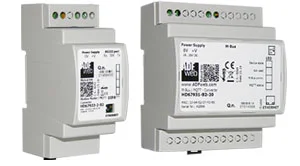
M-Bus Gateways
Configurable Gateway for free variable management
Up to 250 M-Bus devices can be connected
Transmission of project planning via EtherNet

M-Bus Wireless Gateways
Configurable Gateway for free variable management
Up to 250 M-Bus wireless devices can be connected
@ 433 MHz / 868MHz
Transmission of project planning via EtherNet
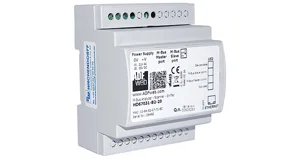
M-Bus scanner / readout module
- Conveniently read out connected M-Bus devices
- Change baud rate, M-Bus slave ID and parity using software
- Can be integrated as a master or slave

 to top
 Contact
 Request form