



3G switch-off, switch to 4G/LTE
Which standard was used?
3G was launched back in 2000 when the licenses for the 1920 MHz and 2170 MHz frequency range were auctioned off. After 20 years, Telekom and Vodafone switched off the 3G network on June 30, 2021. Telefonica (O2) switched off the 3G network on January 1, 2022. Within Europe, almost all mobile network providers have already switched off or will do so in the near future. Under the motto "4G/LTE for all", the providers have pushed ahead with the further expansion of the 4G/LTE network and completed it almost nationwide. Telekom and Vodafone have switched their customers' 3G tariffs to 4G free of charge. With other providers, this had to be checked and applied for individually.
Why was it switched off?
- Switching off 3G was a necessary step to free up the frequency bands for 5G.
- The Federal Network Agency always allocates frequency bands for use by mobile network providers for a limited period of time. The period of use for 3G ended on 31.12.2020.
- The performance data of the current 5G expansion is (unfortunately) still often far from the targets.
- Due to the relatively short product life cycles of consumer products, most devices have already supported 4G/LTE for many years.
What happened after the 3G switch-off?
This is/was very much device-dependent. Many routers and modems try to connect via 2G/GPRS if they support 2G. For many applications, however, the significantly reduced data rate is not sufficient for the respective application (VPN, remote desktop, video transmission, data acquisition in certain orders of magnitude). Disconnections and severe delays in data transmission are/were the foreseeable consequences.
Falling back from 3G devices to 2G is/was therefore usually not an option!
In addition, the existing radio cells can only manage a significantly lower number of connections with 2G subscribers when using 2G technology. In some countries, such as Switzerland, the 2G network has been switched off as well as the 3G network. One of the reasons for this is that voice transmission in many countries already takes place via voice-over-LTE or will do so in the future.
When will 5G arrive in the industry?
5G technology must first prove itself and be extensively tested before it can be used in industrial applications. Reliability and security are just two important aspects here. This will take (at least) two more years.
The global network expansion is also still comparatively low. However, as the German mechanical and plant engineering industry, for example, is very international and German machines are exported worldwide, this is an important prerequisite for use in series production.
According to various manufacturers in the field of industrial mobile communications products, the consumer market will be supplied with the required 5G modem chipsets for smartphones, tablets, etc. in the first stage (2020 to 2021).
As a result, manufacturers in the industrial sector only have very small quantities available for prototyping and pre-series production at present and in 2021. At this stage, the prices are also still far from the target prices that a customer would expect or pay.
4G/LTE is ideally suited for industry!
- It is a technology that has been tried and tested for over 10 years.
- The network coverage of 4G/LTE in Germany is >96%!
- Special variants for industry, such as LTE-M and NBIoT, address the needs of industrial applications, e.g. in terms of range, subscriber density and energy consumption.
- Starting from 150 Mbit/s, LTE Advanced/Advanced Pro offers transmission rates of up to 1 Gbit/s and thus offers further possible expansion stages for existing applications.
- The Federal Network Agency does not plan to use the LTE frequency bands until 2033 (sub-area 2025) for a possible reallocation.
How to successfully switch to 4G/LTE
A: Hardware check
First of all, it must be checked whether the hardware used (e.g. router, modem, etc.) supports LTE, otherwise it must be converted or upgraded. The respective antenna must not be forgotten, as it must be designed for the LTE frequencies.
B: The mobile phone provider's contract must also cover LTE technology; if necessary, adjust the contract.
C: The SIM card must be suitable; replace if necessary.




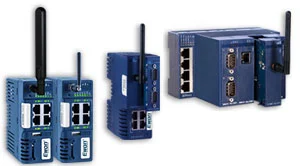
 to the remote maintenance routers
 to top
 Contact
 Request form