








PROcessFIeldBUS was launched in Germany in 1987 as part of a publicly funded project by companies and institutes. Since 1993, the PROFIBUS-DP (Decentralized Peripherals) version has been designed to enable fast and reliable data transmission between field devices such as PLCs, process control systems, I/O, drives, valves, transmitters and many more. PROFIBUS has been successfully anchored worldwide in the IEC 61158 and IEC 61784 standards. The installed base of PROFIBUS devices is in the tens of millions.
Physics
PROFIBUS is physically based on the RS485 serial transmission technology. Usual bit rates are between 9.6 kBit/s and a maximum of 12 Mbit/s. Often 500 kBit/s or 1.5 Mbit/s are used, as this is the most balanced ratio of transmission rate to the permissible cable length. Bus terminating resistors should be set in accordance with the specifications of the RS485 transmission technology. PROFIBUS is also rarely transmitted via fiber optic or radio solutions. The connection technology used is either 9-pin Sub-D plugs/sockets with standardized pin assignment or B-coded M12 plugs. Profibus plugs usually have integrated, switchable terminating resistors.
Topology
PROFIBUS uses the line topology. The maximum number of bus participants is 126, whereby these are divided into bus segments of 32 participants each. Repeaters are used between the segments to refresh the signal. The PROFIBUS structure can also be designed redundantly
PROFIBUS is a so-called master/slave system. The master is an active participant that requests data from the passive participants (slaves) or sends data according to its own clock. There is usually only one master (master class 1) on the bus (usually a PLC) which exchanges data cyclically (PROFIBUS-DPV0) with the slaves. In order to accommodate operating devices (HMI, master class 2) as well, there is the option to request and write data from slaves acyclically (PROFIBUS-DPV1) when the master class 1 is not active.
In principle, it is also possible to operate several class 1 masters on one bus, whereby the slaves are permanently assigned to a master and the masters synchronize (token passing) their respective access to the bus via a token.
A maximum of 244 bytes of data can be transferred cyclically per bus participant.
The device is addressed on the device either by hardware (dip switch, rotary switch) or software. Each address may only be assigned once on the bus.
Data is addressed by specifying the slot and index. This information is part of the respective device description file of a PROFIBUS device. In the case of modular devices, the slot and index can be seen in the visual bus configuration.

The PROFIBUS is usually configured using software provided by the PROFIBUS master provider, usually a PLC. The device description files (GSD files) are integrated so that the configuration can be carried out using the device properties described there. Bus parameters (e.g. baud rate, cycle times) are set and the assigned device addresses are made known to the PROFIBUS master, and much more.
Variants / Versions

The PROFIBUS-PA (process automation) is transmitted on a special physics (Manchester Coding with Bus-Power - MBP) for the requirements of the process industry (e.g. explosion protection). The supply voltage for the bus interface is transmitted together with the data signals. The baud rate is set to 31.25 kbit/s.
MPI (Multipoint Interface) is based on PROFIBUS, but is a proprietary protocol from Siemens for networking controllers with each other or with operating devices.
MPI is also the programming and diagnostic interface for many older Siemens controllers. The baud rate is 187.5 kBit/s with a cable length of max. 50 m. The number of participants is 32 devices. Via the so-called Global Data (GD), small amounts of data can be transferred without additional programming (depending on the PLC, 4, 16 or 32 connections with 22, 32 or 64 bytes of data each). Up to 64 kByte can be transferred via communication function blocks (CFB) in the PLC.
There are special operating and monitoring connections for operator panels (OPs).


Remote maintenance router with Profibus/MPI interface
Remote access and data acquisition via the Internet for Siemens controllers and others.
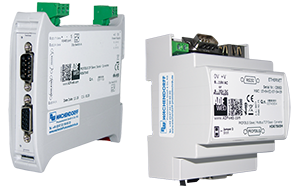
Gateways
for connection to PROFIBUS interfaces
Slave / Master .....
Various housing designs
Various bus protocols possible
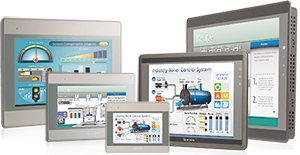
HMI with MPI interface
Visualization and operation of data from the MPI interface of e.g. Siemens control systems.
(In the product filter, please select RS485 in the Interfaces category)
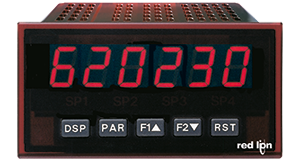
Digital display
with PROFIBUS interface card
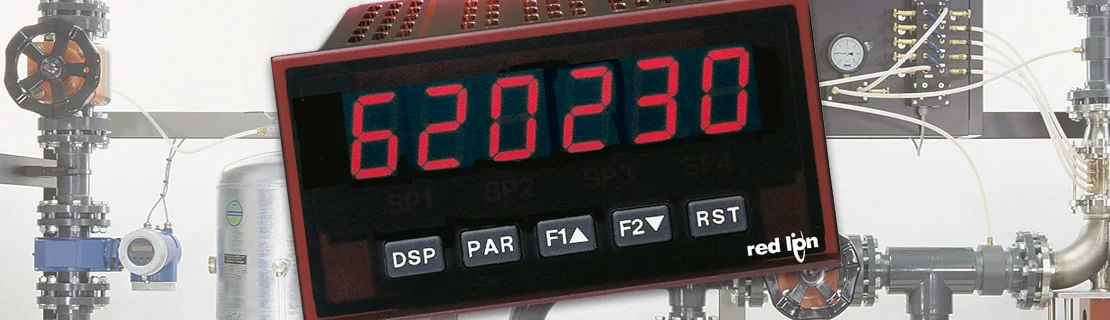
Industrial counter / tachometer / slave display PAXI
6-digit digital display for remote and interface systems
with PROFIBUS interface card
 to top
 Contact
 Request form